
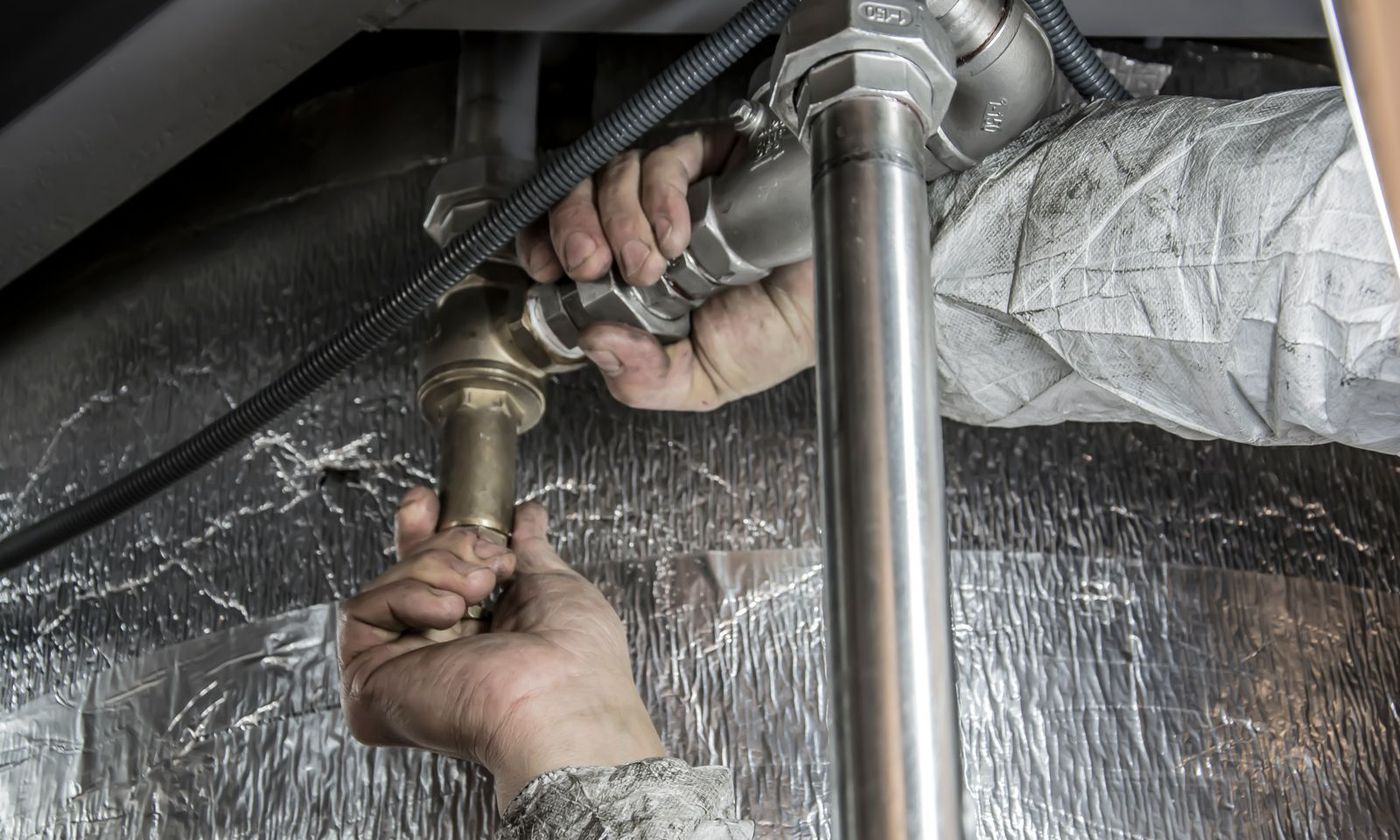
Find the source before anything else
Water travels. A leak at the cold inlet runs down the outside of the tank and pools at the base, which looks identical to a failed tank until you dry everything and watch where it reappears. Tracing the actual origin is the whole job — the repair follows from it.
Leak sources, from best case to worst
- Inlet and outlet connections. Threaded nipples, flex connectors and dielectric unions loosen and corrode. Repairable in place.
- Drain valve. Plastic drain valves warp and fail to seat, especially after a flush. Usually replaceable without draining the whole system. See drain valve repair.
- Temperature and pressure relief valve. A valve discharging is often doing its job correctly, which means the real fault is excess pressure or temperature. Covered under relief valve repair.
- Heating element gaskets. On electric tanks, a seeping element flange leaves water running from the access panel.
- The tank itself. Internal corrosion perforates the steel. There is no repair for this — a leaking tank is replaced.
What to do right now
Shut off the water, then the energy
Close the cold water shut-off on the pipe feeding the heater. For a gas unit, turn the gas control to off. For electric, switch off the breaker — running an element in a draining tank destroys it in minutes. Then call.
If water is actively spreading across a finished basement, getting the supply closed matters more than getting the diagnosis right. The heater can wait; saturated drywall and flooring cannot.
Why tanks corrode through
Every steel tank has a sacrificial anode rod that corrodes in place of the tank wall. Once the anode is consumed, the tank lining starts losing the fight, and the failure begins from the inside where nothing is visible. That is why tank leaks appear suddenly on a unit that was working fine the day before.
Sediment accelerates it. A thick layer at the bottom traps heat against the steel, stressing the lining directly above the burner. Tanks that were never flushed tend to fail earlier and to fail at the base.
Water damage in Wilmington basements
Much of Wilmington's housing puts the water heater in an unfinished or partly finished basement, and a slow leak can run for weeks before anyone notices. In the older rowhome blocks through Little Italy and Union Park Gardens, heaters often sit on the floor without a drain pan and without a floor drain nearby, so there is nowhere for a leak to go.
If your heater is not sitting in a pan, that is worth correcting whether or not it is leaking today — particularly on an upper floor or above a finished space.
When the tank has gone
A perforated tank cannot be patched, welded or sealed. Compounds sold for the purpose do not hold against 50+ PSI of supply pressure at temperature. If the leak is from the body of the tank, the honest answer is replacement, and continuing to run the unit only extends the water damage.
Related repairs
- Drain valve repairDripping, seized and sediment-blocked drain valves, plus tank flushing.
- Pressure relief valve repairDischarging, dripping and seized T&P valves — and the pressure problems behind them.
- Water heater replacementTank and tankless replacement, correct sizing, venting and code compliance.
- Expansion tank repairWaterlogged tanks, failed bladders and incorrect pre-charge pressure.
Questions we get asked
Is a leaking water heater an emergency?
It depends on volume and location. A slow weep at a fitting can wait for a scheduled visit. Active water spreading across a floor, or any leak above a finished space, should be shut off at the cold supply immediately.
Can a leaking tank be repaired?
No. If the steel tank itself is perforated, there is no reliable repair — internal corrosion that has breached the lining will continue from the inside out. Leaks from valves, fittings and gaskets are a different matter and are repairable.
Water is dripping from a pipe near the top of my heater. What is it?
That is often the temperature and pressure relief valve discharging down its pipe. It usually means the valve is responding to real excess pressure or temperature, so the cause needs investigating rather than the valve being capped.
Why did my heater start leaking right after I flushed it?
Sediment can hold a worn drain valve seat closed. Flushing disturbs it, and the valve then fails to reseat. It is a common sequence and usually means a new drain valve rather than anything wrong with the tank.
Get it looked at
Describe what the heater is doing when you call — the symptom usually narrows the fault before anyone arrives.
(302) 603-9708 Call now for service