
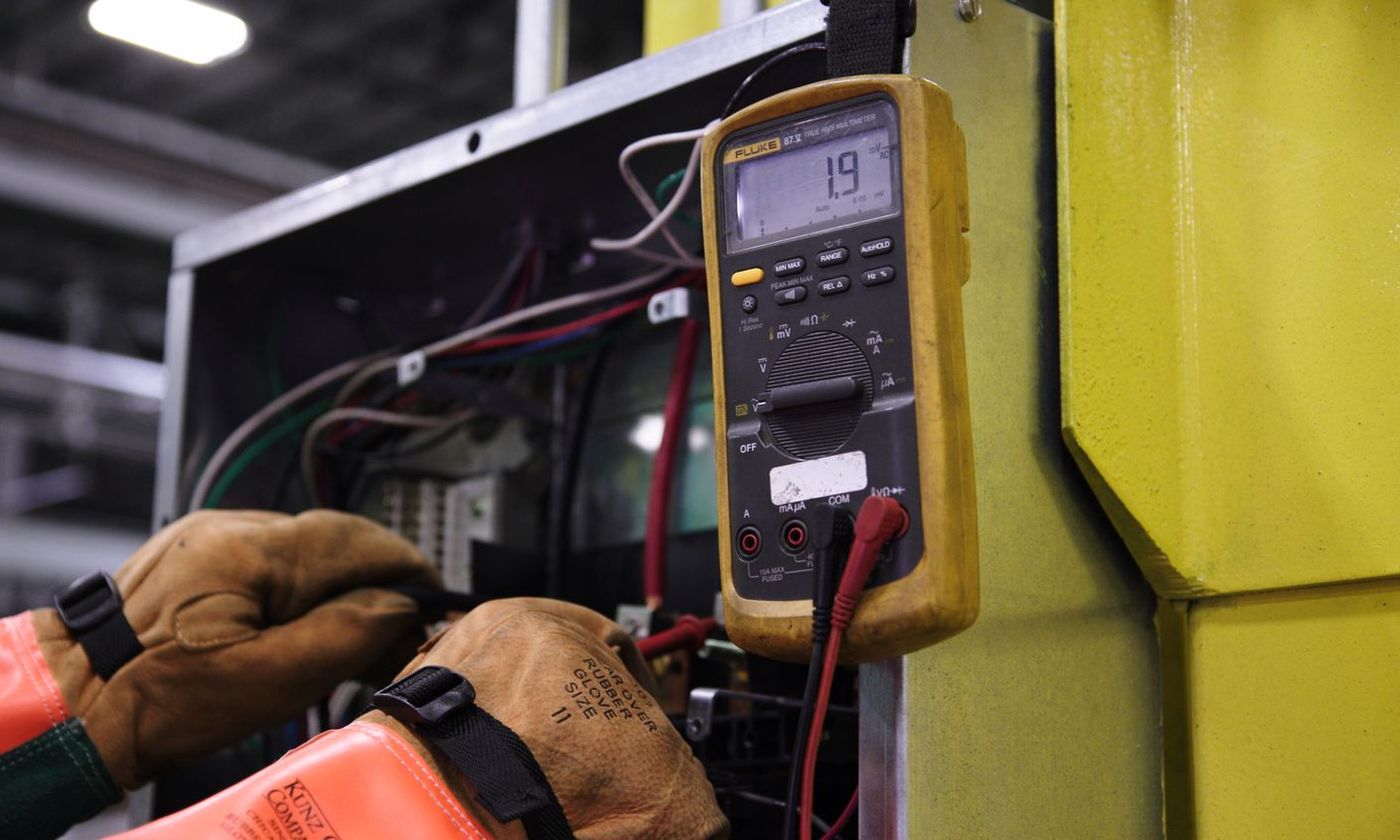
Three different complaints
“Not heating” covers three distinct problems, and separating them is the first diagnostic step.
- Never gets hot. Water reaches warm and stops. On electric, this usually means the upper element or thermostat. On gas, a burner that is firing weakly or a thermostat set far too low.
- Hot, but runs out fast. The tank heats but the usable volume has shrunk — a dead lower element, or sediment occupying the bottom third of the tank.
- Slow recovery. Hot water returns, but takes much longer than it used to. Points at a fouled burner, a scaled element, or heavy sediment.
If there is no hot water at all rather than insufficient hot water, start with no hot water repair instead.
Causes by fuel type
Electric tanks
Almost always an element or thermostat. A failed lower element halves the usable capacity while leaving the water genuinely hot at first draw — a distinctive and easily recognised pattern.
Gas tanks
Burner ports clogged with lint and rust scale, a gas control valve drifting out of calibration, or a partially restricted flue reducing combustion efficiency.
Tankless units
Scale in the heat exchanger reduces heat transfer, so output temperature falls as flow rises. Often accompanied by intermittent error codes.
Any system
A crossover at a failed mixing valve or single-handle faucet lets cold water migrate into the hot line, diluting every outlet in the house. It mimics a heater fault perfectly.
Sediment, and why capacity shrinks
Mineral sediment settles to the bottom and stays there. On a gas heater it sits directly between the burner and the water, so the burner heats steel instead of water — slow recovery, higher gas use, and eventually the popping and rumbling covered under noise repair. On an electric heater it buries the lower element and burns it out.
Check the obvious first
Before assuming a component has failed, two things are worth ruling out. Thermostat settings drift or get changed — a gas control knocked to a lower setting during a basement tidy is more common than it sounds. And household demand changes: a new high-flow shower head or an added bathroom can outgrow a tank that was correctly sized five years ago. Neither is a fault, and neither is fixed by replacing parts.
Wilmington water and scale
Supply water across Wilmington and much of New Castle County carries enough mineral content to build measurable scale over a tank's life, particularly in heaters that have never been flushed. Homes throughout Wawaset Park, The Highlands and Elsmere with original heaters frequently show the classic pattern: adequate temperature, but half the hot water they used to deliver.
Related repairs
- Heating element repairBurned-out and scaled elements, correct wattage matching, grounded element faults.
- Water heater thermostat repairMiscalibrated controls, stuck contacts and tripped high-limit switches.
- Water heater burner repairClogged ports, poor combustion, soot and manifold faults on gas tanks.
- No hot water repairComplete loss of hot water on gas, electric and tankless systems.
Questions we get asked
Why is my water warm but never hot?
On an electric tank that usually indicates the upper element or upper thermostat. On gas, check whether the temperature setting has been moved, then look at burner condition. A plumbing crossover can also cause it at every fixture at once.
Why does my hot water run out faster than it used to?
Either a failed lower element on an electric unit, or sediment build-up occupying the bottom of the tank and reducing usable capacity. Both are common on heaters that have been in service several years.
Could the problem be my faucet rather than my heater?
Yes. A failed single-handle cartridge or a bad mixing valve allows cold water to cross into the hot supply. A quick test is whether every hot outlet is affected equally or just one — one fixture points at the fixture.
Should I turn up the thermostat to compensate?
Raising it above around 120°F increases scalding risk and accelerates scale formation without addressing the actual fault. If the tank cannot hold temperature at a normal setting, something is wrong with the heater.
Get it looked at
Describe what the heater is doing when you call — the symptom usually narrows the fault before anyone arrives.
(302) 603-9708 Call now for service